Privacy-Preserving in Generative Models
Can an AI model forget what we ask it to forget—instantly, selectively, and at scale?
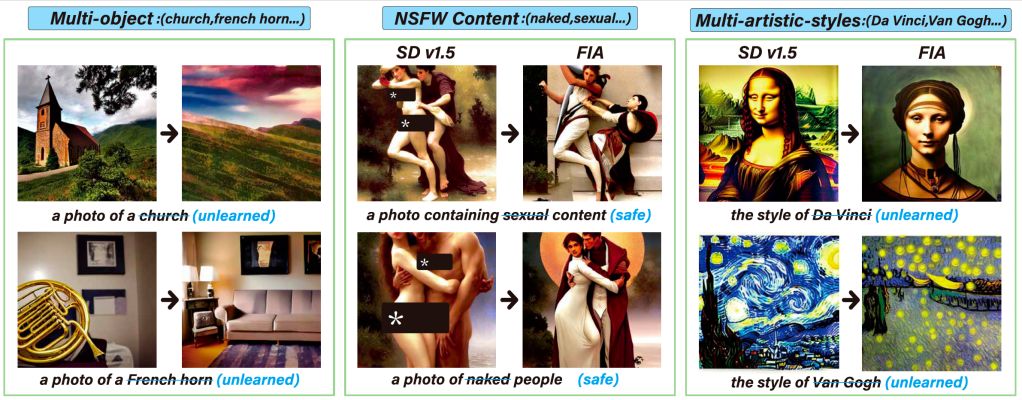
We are developing a new generation of machine unlearning techniques for generative models, enabling unwanted concepts to be removed while preserving the quality and integrity of generated content. Our research explores both training-time and inference-time unlearning, with a particular focus on removing multiple or even large-scale sets of concepts simultaneously—without expensive model retraining. By identifying and selectively controlling concept-related representations inside generative models, we aim to make unlearning fast, scalable, and applicable even to frozen or proprietary models, opening new possibilities for trustworthy and controllable generative AI.
- Concept recovery in pruning-based model [CVPR’26]
- Large-scale machine unlearning for generative model [ICLR’26] [ICML’26]
- Diffusion unlearning [ICCV’25]
- Knowledge graph unlearning [CIKM’25]
- Concept auditing [CCS’25]
- Backdoor attack [ECAI’25] [EMNLP’25]
- Wireless system [S&P’25]
Sustainable and Resource-Efficient Intelligent Systems
How can we build intelligent computing systems that grow in capability without growing their environmental footprint?
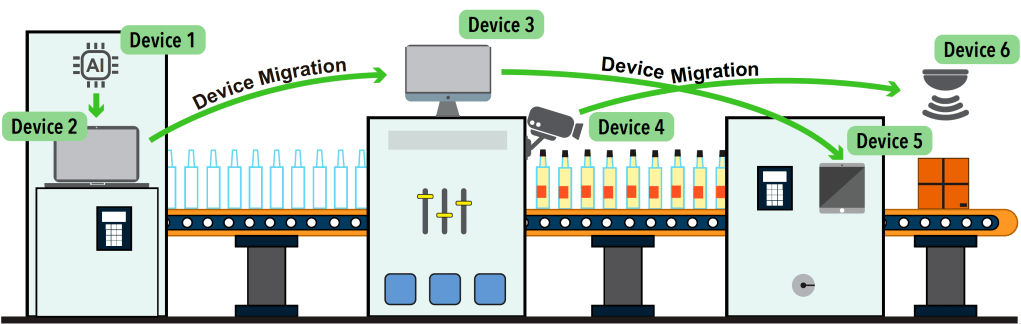
We are developing sustainable computing and AI systems that reduce environmental impact by extending the useful lifetime of computing resources and making better use of existing infrastructure. Our research explores how devices, computation, learning, and communication can be dynamically reorganized and reused as systems evolve, rather than relying on continuous hardware replacement. By combining lifecycle-aware optimization, collaborative edge intelligence, and adaptive communication, we aim to build computing systems that are resource-efficient, resilient, and environmentally sustainable—from edge and IoT platforms to large-scale intelligent infrastructures.
- Prompt learning in VLM [ECCV’26]
- Zeroth-order LLM fine-tuning [NeurIPS’25]
- Multimodal learning [NeurIPS’25]
- Sensing [SenSys’24]
- Data center life cycle assessment [Cleaner Energy Systems’25]
Efficient and Scalable Machine Learning System
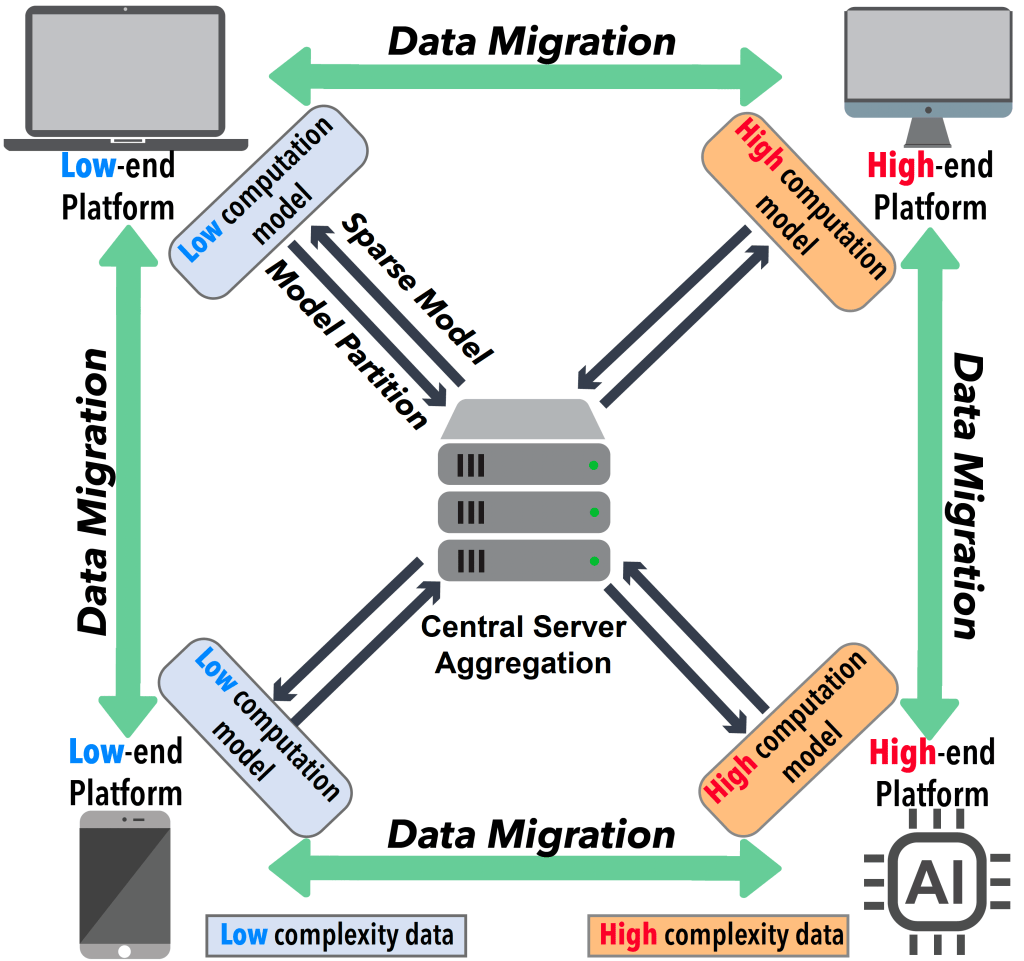
How can we make AI fundamentally more efficient—from data and model sparsity to hardware–software co-design and large-scale computing?
We are developing adaptive and resource-efficient intelligence for heterogeneous computing systems, spanning Edge AI, mobile computing, distributed learning, and hardware–software co-design. Our research explores how data, models, and computational workloads can be dynamically moved and matched to the most suitable devices and learning strategies, rather than being constrained by where data is originally generated. By jointly optimizing communication, computation, and learning, we aim to fully utilize heterogeneous hardware resources and enable faster, more scalable, and more efficient AI systems across edge, mobile, and emerging computing platforms.
- Sparse training [CPAL’24][ICLR’25][NeurIPS’23][ICML’22][CVPR’22][NeurIPS’21 Spotlight][NeurIPS’21]
- Pruning for CV model and LLM [ICML’24][DAC’21][ECCV’20][AAAI’20]
- Data overfitting [ECCV’24][CVPR’23 Spotlight]
- Graph sparsity [ICLR’23]
- Data sparsity [AAAI’22][ECCV’22]
- Mobile software-hardware co-design [AAAI’20][ASPLOS’20]
- Machine learning in FPGA [FPGA’22][MICRO’17]
- GPU acceleration [PACT’20]
- Supercomputing [ICS’20]
Autonomous Edge Intelligence for Dynamic Environments

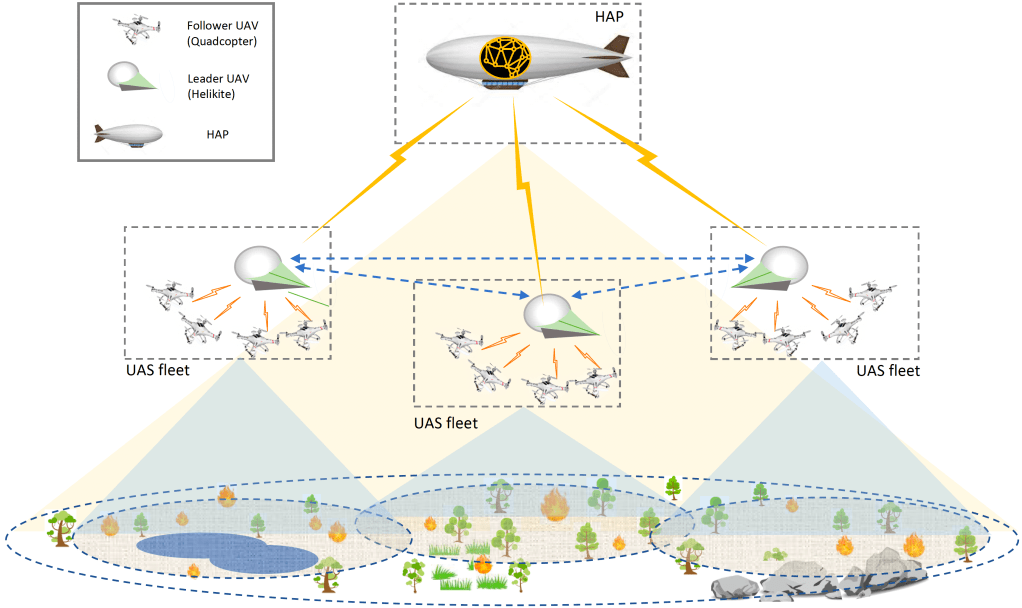
How can autonomous systems sense, learn, and make decisions in real time with limited resources?
We are developing autonomous and distributed AI systems for complex, rapidly changing environments, integrating Edge AI, multi-agent intelligence, onboard computing, and physics-aware learning. Our research explores how heterogeneous autonomous platforms can collaboratively sense their surroundings, process data locally, adapt to limited computation and communication resources, and make real-time predictions and decisions. By combining efficient AI, coordinated autonomy, multimodal sensing, and digital-twin technologies, we aim to enable resilient and intelligent autonomous systems for applications ranging from wildfire monitoring and disaster response to environmental sensing and other mission-critical domains.
Non-von Neumann Computing & Emerging Technology
- ReRAM Based machine learning [DATE’22][ISCA’21][DATE’21][ISQED’21][DAC’20]
- Quantum-Flux-Parametron Superconducting Circuits [ICS’20][ISVLSI’19][ASC’18]

